Made with Levo





Know More About This Test
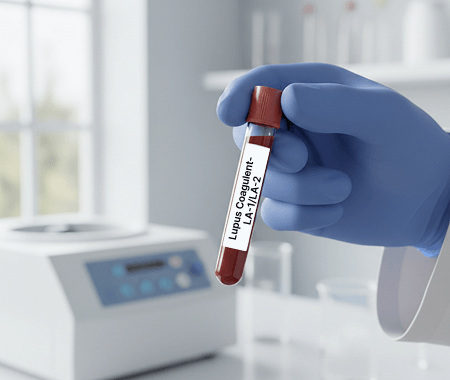
The Lupus Anticoagulant test detects antibodies that interfere with normal blood clotting processes. Despite its name, its presence increases the risk of thrombosis rather than bleeding.
This test is crucial in diagnosing antiphospholipid syndrome (APS), an autoimmune condition associated with recurrent blood clots and pregnancy complications.
Why Is This Test Recommended?
Your healthcare provider may prescribe a Lupus Anticoagulant panel to investigate complex circulatory or reproductive health issues, such as:
Diagnosing Antiphospholipid Syndrome (APS): This is one of the three primary tests used to confirm this autoimmune clotting disorder.
Investigating Unexplained Blood Clots: Determining why a relatively young or healthy person has developed a Deep Vein Thrombosis (DVT), Pulmonary Embolism (PE), or a premature stroke.
Evaluating Recurrent Miscarriages: It is a critical screening tool for women who have experienced multiple pregnancy losses or late-term complications like stillbirth.
Explaining a Prolonged aPTT: If a routine blood clotting test (aPTT) shows an abnormally long clotting time, the LA test is used to see if an antibody is causing the interference.
Assessment of Autoimmune Diseases: Monitoring patients with Systemic Lupus Erythematosus (SLE) to see if they have developed these high-risk antibodies.
Symptoms or Conditions That May Require a Lupus Anticoagulant Test
Because the antibody itself does not cause pain, you may only be tested after a clinical event or if you show signs of vascular stress, including:
Swelling and Pain in One Leg: Classic signs of a clot in the deep veins (DVT).
Sudden Shortness of Breath: Which may indicate a clot has traveled to the lungs (Pulmonary Embolism).
Chronic Migraines or Seizures: Sometimes linked to microscopic clots in the brain’s blood vessels.
Skin Mottling (Livedo Reticularis): A purple, lace-like pattern on the skin that becomes more visible in the cold.
Pregnancy Complications: History of high blood pressure during pregnancy (pre-eclampsia) or placental issues that affect fetal growth.
Unexplained Low Platelet Count: Known as thrombocytopenia, which can occur alongside these antibodies.
How Is the Test Performed and Prepared For?
A blood sample is collected. Anticoagulant medications may affect results and should be reported.
What Do the Results Mean?
Negative: No Lupus Anticoagulant was detected. This is a reassuring result regarding APS.
Positive: The antibody is present. However, to meet the international criteria for Antiphospholipid Syndrome, you must have a persistent positive result.
The 12-Week Rule: If you test positive, you must repeat the test in 12 weeks. If it is still positive after three months, it is considered a permanent part of your immune profile rather than a temporary reaction to an infection
Lifestyle Tips to Manage "Sticky Blood" Risks
If you test positive for the Lupus Anticoagulant, your focus should be on reducing all other factors that make blood clot:
Stay Active on Long Journeys: During flights or long car rides, perform toe curls and leg lifts. Consider wearing medical-grade compression stockings to prevent blood from pooling in your legs.
Absolute Smoking Cessation: Tobacco use and the Lupus Anticoagulant are a dangerous combination that drastically increases stroke risk.
Monitor Blood Pressure: Keeping your blood pressure in a healthy range reduces the turbulence in your arteries, making it harder for clots to catch and grow.
Healthy Weight: Excess body fat can increase inflammation and slow down blood flow in the veins.
Discuss Hormonal Treatments: Avoid medications containing estrogen, such as certain birth control pills or HRT, as these can trigger a clotting event in antibody-positive individuals.
Frequently Asked Questions (FAQs)
Does this mean lupus?
Not necessarily; despite its name, lupus anticoagulant can be present without systemic lupus erythematosus (SLE); it's found in various autoimmune conditions and antiphospholipid syndrome, though some lupus patients may also test positive.Is it a clotting risk?
Yes, the presence of lupus anticoagulant significantly increases the risk of abnormal blood clot formation in veins and arteries, leading to complications like deep vein thrombosis, stroke, pulmonary embolism, and pregnancy-related issues.Can results be temporary?
Yes, lupus anticoagulant can appear temporarily during infections, certain medications, or other transient conditions, which is why a single positive result is not sufficient for diagnosis and confirmation testing after 12 weeks is essential.Is repeat testing needed?
Mandatory; repeat testing after at least 12 weeks is required to confirm persistent presence of lupus anticoagulant antibodies, as transient positivity does not carry the same clinical significance or require long-term anticoagulation therapy.Is it inherited?
Usually autoimmune; lupus anticoagulant typically develops as part of an acquired autoimmune response rather than being inherited, though there may be some genetic predisposition to developing autoimmune conditions in general.