Made with Levo




Know More About This Test
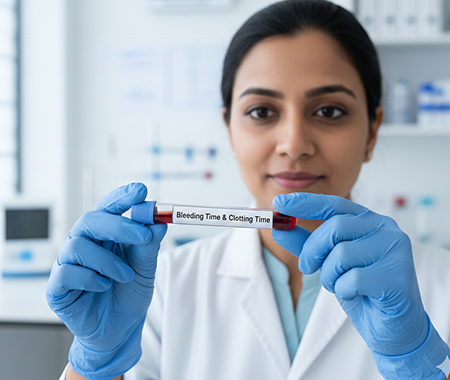
Bleeding Time (BT) and Clotting Time (CT) tests assess platelet function and clot formation. They evaluate bleeding disorders, are simple bedside coagulation tests, help assess surgical bleeding risk, and screen primary hemostasis.
Why Is This Test Recommended?
These tests are recommended for:
History of excessive bleeding
Pre-surgical evaluation
Suspected platelet disorders
Unexplained bruising
Coagulation abnormality screening
Understanding BT & CT
BT measures platelet plug formation, while CT measures fibrin clot formation. Prolonged times indicate bleeding risk and are influenced by platelet count and function. These tests are not definitive alone and require correlation with other coagulation studies.
Symptoms or Conditions That May Require This Test
Frequent nosebleeds
Gum bleeding
Heavy menstrual bleeding
Easy bruising
Post-surgical bleeding
How Do I Prepare for the Test?
No fasting required. Inform your doctor about medications, especially aspirin or blood thinners.
How Is the Test Performed?
A small skin prick is performed, and the time taken for bleeding to stop (BT) and blood to clot (CT) is recorded. The procedure causes mild discomfort only and is performed under sterile conditions.
What Happens After the Test?
Prolonged BT: Suggests platelet issue
Prolonged CT: Suggests coagulation defect
Further coagulation tests may be needed. Results guide surgical planning and help prevent complications.
What Do the Results Mean?
Normal ranges can vary slightly depending on the technique used (e.g., Duke’s method vs. Ivy’s method), but generally:
Normal Bleeding Time: Typically between 2 to 7 minutes. A prolonged BT often suggests a platelet problem or Von Willebrand disease.
Normal Clotting Time: Typically between 5 to 15 minutes. A prolonged CT may indicate a deficiency in clotting factors (like Hemophilia) or the presence of blood-thinning medications in the system.
Lifestyle Tips to Support Healthy Blood Clotting
Maintaining a balanced clotting system involves supporting both your liver (where clotting factors are made) and your bone marrow (where platelets are made):
Vitamin K Intake: Incorporate leafy greens like spinach, kale, and broccoli into your diet. Vitamin K is essential for the production of several key clotting factors.
Liver Health: Since the liver produces most clotting proteins, avoiding excessive alcohol and processed sugars helps maintain its efficiency.
Be Mindful of Supplements: Some natural supplements, such as Gingko Biloba, Garlic, and Ginger in high doses, can thin the blood. Always discuss these with your surgeon before a procedure.
Protective Habits: If you have a known history of prolonged bleeding, use a soft-bristled toothbrush and an electric razor to minimize the risk of minor injuries.
Hydration and Circulation: Proper hydration ensures that blood cells can move freely and react quickly to injury sites.
Frequently Asked Questions (FAQs)
Are these tests outdated?
Still useful; while more advanced tests exist, BT and CT remain valuable bedside screening tools, especially in resource-limited settings.Is it painful?
Mild; the skin prick causes minimal discomfort, similar to a finger prick for blood sugar testing.Can medicines affect results?
Yes, aspirin, NSAIDs, and anticoagulants can significantly prolong bleeding and clotting times.Is fasting required?
No, fasting is not required for BT and CT tests.Are confirmatory tests needed?
Yes, abnormal BT or CT results typically require more specific coagulation tests like platelet count, PT, aPTT, or specialized platelet function studies.