Made with Levo




Understanding the Cardiac Enzymes (Cardiac Biomarkers) Test
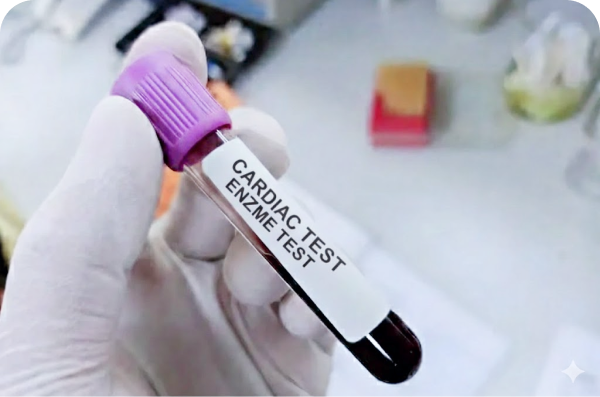
Cardiac enzymes, also known as cardiac biomarkers, are substances released into the bloodstream when the heart muscle undergoes stress or damage. These tests are critical for diagnosing serious heart-related conditions such as a heart attack and acute coronary syndrome.
What Are Cardiac Enzymes?
These are proteins and enzymes released by damaged heart muscle tissue:
Troponin (TnT and TnI): Highly specific and sensitive markers of heart muscle injury. Elevated levels indicate heart damage.
Creatinine Kinase (CK) and CK-MB: CK-MB is primarily found in heart muscle and rises rapidly after a heart attack.
Why is the Cardiac Enzyme Test Performed?
Diagnosing Heart Attack or Acute Coronary Syndrome
Detecting Heart Muscle Damage
Monitoring Medication and Treatment Outcomes
Evaluating Stress on the Heart: Sometimes BNP levels are measured to assess heart strain.
Symptoms That May Require Testing
Chest pain or tightness
Difficulty breathing
Faintness or dizziness
Pain spreading to jaw, arm, or back
How Is the Test Performed?
Procedure: A small blood sample is drawn from your arm.
Preparation: No fasting or special preparation is needed.
Repeated Testing: Blood tests may be repeated over time to track changes in enzyme levels.
What are the types of cardiac enzymes (cardiac biomarkers)?
There are different types of cardiac biomarkers. All of them are enzymes or proteins. Elevated heart enzymes may show that you have cardiovascular disease or other heart problems.
A biomarker test for troponin is the primary test healthcare providers use to detect heart damage from a heart attack or ACS. Troponin levels can rise for up to 12 hours after a heart attack. They stay elevated for up to two weeks. You may get several cardiac enzyme tests spaced several hours or days apart to measure these biomarkers.
Healthcare providers may also test for natriuretic peptides (NPs) that may be elevated in conditions like heart failure. Providers can measure various types of peptides, but they most commonly use N-terminal proBNP (NT-proBNP) in the assessment of strain on the heart due to heart failure.
Who needs a cardiac enzyme (cardiac biomarker) test?
Your healthcare provider may order a cardiac enzyme test if you have symptoms of a possible heart problem. These symptoms include:
Chest pain
Dizziness
Nausea
Profuse sweating
Shortness of breath
Heart failure exacerbation
Where do you get a cardiac enzyme marker test?
A cardiac enzyme marker test requires a blood draw. The blood draw takes just a few minutes. In an emergency, the blood draw takes place in an emergency department or hospital. For nonurgent situations, the test may take place at your healthcare provider’s office or a blood-testing lab.
Understanding the Results
Normal Results: Enzymes are either not measurable or present in very small quantities.
Elevated Results: Indicates heart muscle damage, with troponin elevation being a strong indicator.