

 Made with Levo




Understanding The Complete Blood Picture (CBP)
The Complete Blood Picture (CBP) is one of the most common and essential blood tests performed in modern medicine. It evaluates the overall health of your blood and is a standard part of routine checkups. Unlike specific diagnostic tests, the CBP acts as a broad screening tool that can detect a wide variety of disorders, including anemia, infection, inflammation, leukemia, and bleeding disorders. It is also used to monitor ongoing medical conditions (like heart disease or chemotherapy treatments) and to check for side effects of certain medications.
Components Measured
The test does not just give a single result; it breaks down the blood into its three major cellular components:
Red Blood Cells (RBCs): The cells responsible for carrying fresh oxygen from the lungs to the rest of the body.
Hemoglobin (Hb): The iron-rich protein inside RBCs that actually holds the oxygen.
Hematocrit (Hct): Measures the percentage of your blood volume that is made up of red blood cells.
Red Cell Indices (MCV, MCH, MCHC): These calculations reveal the average size and hemoglobin content of your red blood cells, which helps doctors diagnose the type of anemia (e.g., Iron deficiency vs. Vitamin B12 deficiency).
White Blood Cells (WBCs): The cells that make up your immune system. The test usually includes a Differential Count, which breaks down the WBCs into five types:
Neutrophils: Fight bacterial infections.
Lymphocytes: Fight viral infections.
Monocytes: Handle chronic infections.
Eosinophils: React to allergies and parasites.
Basophils: Involved in inflammatory reactions.
Platelets (Thrombocytes): Tiny cell fragments that help your blood clot to stop bleeding.
Shutterstock
Preparation
Fasting: For a standalone CBP, no fasting is required. You can eat and drink normally. However, if this test is part of a larger preventive health package (checking sugar or cholesterol at the same time), you will likely need to fast for 8–12 hours.
Medications: Take your regular medications unless advised otherwise.
Hydration: Being well-hydrated helps make the veins easier to find, making the blood draw smoother.
Procedure
The phlebotomist cleans the area inside your elbow with an antiseptic wipe.
An elastic band is placed around your upper arm to apply pressure and swell the vein.
A needle is inserted into the vein; you may feel a brief sting.
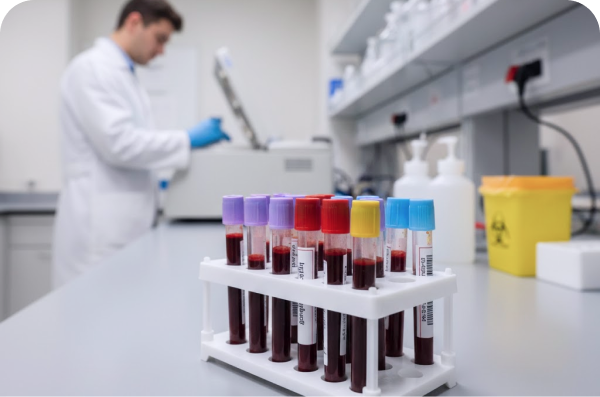
Blood is drawn into a vacuum tube (usually with a purple top, containing an anti-clotting agent).
The needle is removed, and a small bandage is applied.
The sample is analyzed by an automated machine called a hematology analyzer.
Risks
This is a very low-risk procedure. Common minor issues include:
Soreness: Mild pain at the puncture site.
Bruising: A small bruise (hematoma) may form but typically fades in a few days.
Fainting: Rare, but it can happen if you are nervous about needles or blood.
Normal Ranges
Note: Ranges can vary slightly by laboratory, altitude, and gender.
Red Blood Cells (RBC):
Men: 4.5 – 5.9 million cells/mcL
Women: 4.1 – 5.1 million cells/mcL
Hemoglobin:
Men: 13.0 – 17.0 g/dL
Women: 12.0 – 15.5 g/dL
Hematocrit:
Men: 40% – 50%
Women: 36% – 48%
White Blood Cells (Total): 4,500 – 11,000 cells/mcL (for both men and women)
Platelets: 150,000 – 450,000 platelets/mcL
Interpretation
Low RBC/Hemoglobin (Anemia): You may feel tired, weak, or short of breath. Causes include iron deficiency, bleeding, or vitamin deficiencies.
High RBC (Polycythemia): Could be due to dehydration, smoking, lung disease, or living at high altitudes.
High WBC (Leukocytosis): Usually indicates an active infection (bacterial or viral) or inflammation. Extremely high levels may require investigation for leukemia.
Low WBC (Leukopenia): Can be caused by autoimmune disorders, bone marrow problems, or severe infections that use up white blood cells faster than they can be made.
Low Platelets (Thrombocytopenia): Increases the risk of excessive bleeding or bruising.
High Platelets (Thrombocytosis): Can occur due to inflammation or infection, and carries a risk of unwanted blood clots.