Made with Levo




Know More About This Test
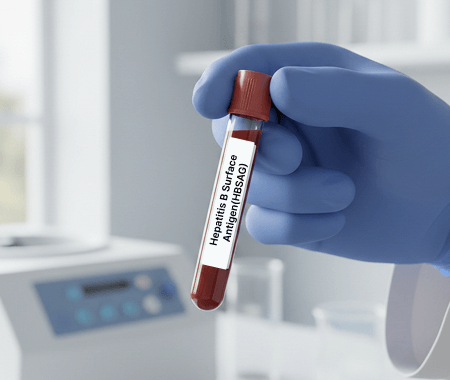
The HBsAg test detects the presence of hepatitis B surface antigen in the blood, which indicates an active hepatitis B virus (HBV) infection. This marker appears early in infection and persists in chronic hepatitis B, making it a cornerstone test for diagnosis and screening.
Hepatitis B is a viral infection that affects the liver and may progress to chronic hepatitis, cirrhosis, or liver cancer if untreated.
Why Is This Test Recommended?
This test is recommended during routine health checkups, antenatal screening, blood donation, pre-operative evaluation, and for individuals with abnormal liver enzymes or symptoms of liver disease.
Symptoms or Conditions That May Require This Test
You may need this test if you experience:
Jaundice - yellowing of the skin or whites of the eyes
Dark-coloured (tea-coloured) urine or pale, clay-coloured stools
Persistent fatigue, loss of appetite, or unexplained nausea and vomiting
Right upper abdominal pain or tenderness over the liver area
Fever, joint pain, or a skin rash that may accompany acute HBV infection
Known or suspected exposure to HBV through unprotected sexual contact, shared needles, blood transfusions, or occupational needlestick injury
High-risk situations including working in a healthcare facility with significant exposure risk, sharing needles or razors with an unknown individual, or living closely with a confirmed Hepatitis B-infected person
Advantages of the HBsAg – ECLIA Method
The ECLIA method represents a significant technological advancement over conventional ELISA and rapid immunochromatographic (strip) testing for HBsAg detection.
ECLIA has an imprecision degree of just 5.9% at a detection concentration of 0.5 IU/mL - outperforming ELISA at 14.9% - reflecting its superior reproducibility and analytical precision.
ECLIA is an accurate and reliable test method for the detection of HBsAg, and its automated, quantitative nature makes it ideal for high-volume clinical laboratory settings, ensuring consistency and reducing the scope for human interpretation error.
How Is the Test Performed and Prepared For?
A blood sample is collected. No fasting or special preparation is required.
What Do the Results Indicate?
Results of HBV serological markers can be reported qualitatively or quantitatively as international units per millilitre (IU/mL) or signal per cutoff (s/c) value:
Negative (Non-reactive): HBsAg level less than 1 s/c - indicates no detectable Hepatitis B surface antigen; active HBV infection is unlikely at the time of testing
Indeterminate: HBsAg level between 1 and 5 s/c - result is equivocal and should be repeated; neither a confirmed positive nor a reliable negative
Positive (Reactive): HBsAg level greater than 5 s/c - indicates the presence of HBsAg in the blood; confirmatory testing and specialist evaluation are required
Acute Infection Pattern: HBsAg positive with recent onset of symptoms - antigen typically resolves within 4–8 weeks of symptom appearance in self-limiting acute infection
Chronic Infection / Carrier State: Long-term presence of HBsAg beyond 6 months is a marker of chronic HBV infection and is the primary risk factor for development of chronic liver disease and cancer.
Lifestyle Tips to Protect Against Hepatitis B Infection
Getting a Hepatitis B vaccination is the most effective way to prevent the infection.
Never share needles, syringes, razors, toothbrushes, or any personal items that may come into contact with blood.
Chronic Hepatitis B infection is not curable, but it can be managed with proper medication and lifestyle changes that is why early detection is crucial to prevent severity.
Avoid alcohol entirely if you have been diagnosed with Hepatitis B, as alcohol is directly hepatotoxic and significantly accelerates liver damage in HBV-infected individuals.
Attend all scheduled follow-up appointments and monitoring tests if you are on antiviral therapy.
Frequently Asked Questions (FAQs)
Is fasting required?
No, fasting is not required for the HBsAg ECLIA test; you may eat and drink normally before sample collection.How long do results take?
Results are typically available within 24 hours of sample collection at most diagnostic laboratories.What is the difference between the ECLIA and ELISA methods for HBsAg? ECLIA has a false-negative rate of just 0.2% compared to 1.3% for ELISA and is more suitable for quantitative determination of HBsAg - making it a more sensitive, reproducible, and clinically informative platform for both diagnosis and treatment monitoring.
Does a positive HBsAg result mean I have chronic Hepatitis B?
Not necessarily - a single positive result indicates current infection, which may be acute or chronic.
Can Hepatitis B be cured?
Chronic Hepatitis B infection is not curable, but it can be managed with proper medication and lifestyle changes. Acute Hepatitis B, however, resolves on its own in approximately 90% of adult cases without requiring antiviral treatment.Should I get tested even if I have been vaccinated?
If your vaccination series was completed and your anti-HBs level is protective (above 10 mIU/mL), routine HBsAg testing is generally not indicated.Is the HBsAg test sufficient to fully evaluate Hepatitis B status?
Not entirely - the HBsAg test identifies the presence of the virus but does not provide complete information about the phase of infection, degree of liver damage, or treatment need.
A three-test panel consisting of HBsAg, HBsAb (anti-HBs), and total HBcAb (anti-HBc) is recommended for comprehensive screening.