

 Made with Levo




Understanding The Immunohistochemistry (IHC) Breast Panel
The Immunohistochemistry (IHC) Breast Panel is a vital diagnostic tool used to analyze breast cancer tissue. This panel employs a special staining process to determine the presence or absence of specific biomarkers on the surface of cancer cells. The results of this panel are crucial for determining the characteristics of the cancer and guiding the most effective treatment plan.
Components of the IHC Breast Panel
The IHC Breast Panel typically assesses the status of key receptors, which are proteins that can influence cancer cell growth:
Hormone Receptors (Estrogen Receptor - ER and Progesterone Receptor - PR):
These receptors attach to the hormones estrogen and/or progesterone, and if present, they signal the cancer cells to grow.
If a cancer tests positive for ER and/or PR, it is considered hormone receptor-positive, meaning hormone-blocking therapies are often effective treatment options.
HER2 Receptors (Human Epidermal Growth Factor Receptor 2):
HER2 is a protein that signals HER2-positive breast cancer cells to grow and divide excessively.
IHC testing gives a score (0 to 3+):
0 or 1+: Considered HER2-negative.
2+ (Equivocal/Borderline): Requires further testing, typically with a FISH test, to confirm status.
3+: Considered HER2-positive, indicating that targeted therapies (such as Herceptin) are likely beneficial.
The IHC Process
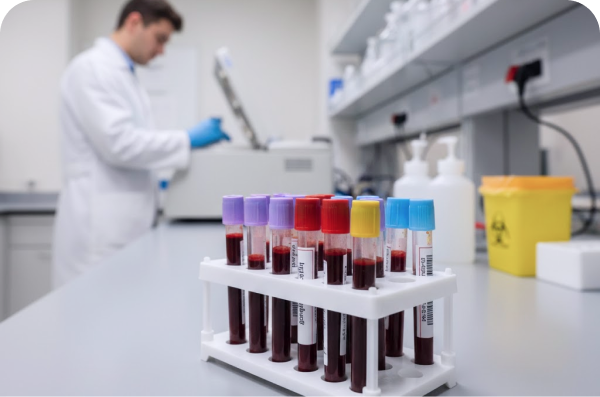
IHC involves treating fresh or frozen breast cancer tissue (removed during a biopsy or surgery) with unique, lab-created antibodies. These antibodies attach to specific proteins (the biomarkers) on the cancer cells. A chemical treatment causes a color change when the link occurs, allowing a pathologist to visually assess the quantity and distribution of these receptors within the tissue sample.
Clinical Significance
The results from the IHC Breast Panel help classify the breast cancer, providing essential information to the healthcare team for personalized treatment planning:
Hormone Receptor Status: Determines if hormone therapy is an appropriate treatment.
HER2 Status: Identifies if the cancer can be treated with HER2-targeted therapies.
Triple-Negative Breast Cancer: If the cancer tests negative for ER, PR, and HER2, it is classified as triple-negative, which may prompt further IHC testing for biomarkers like PD-L1 to assess eligibility for certain immunotherapies.
In summary, the IHC Breast Panel provides critical, detailed information about the tumor's biological makeup, ensuring that patients receive the most appropriate and effective therapies for their specific breast cancer type.