Made with Levo




Know More About This Test
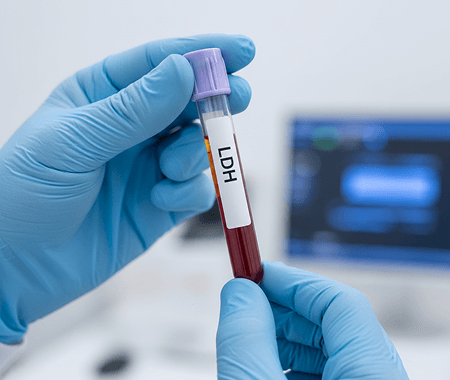
LDH is an enzyme present in nearly all body tissues and is released into the bloodstream when cells are damaged. The LDH serum test measures total enzyme levels, providing insight into tissue injury, inflammation, or disease. Elevated LDH does not point to a single organ but reflects cellular breakdown anywhere in the body.
Why Is This Test Recommended?
Doctors recommend LDH testing to:
Detect tissue damage or inflammation
Monitor hemolytic anemia
Assess liver or muscle injury
Support diagnosis of certain cancers
Evaluate unexplained fatigue or pain
Understanding LDH
LDH exists in multiple isoenzymes found in heart, liver, muscles, lungs, and blood cells. Elevated levels indicate cell injury but require correlation with other tests.
Symptoms or Conditions That May Require This Test
Persistent fatigue
Muscle pain or weakness
Anemia symptoms
Suspected infection or inflammation
Why Do I Need This Test?
It helps identify ongoing tissue damage and disease activity.
How Do I Prepare for the Test?
No fasting required. Avoid strenuous exercise before test.
How Is the Test Performed?
Blood is drawn from a vein and analyzed.
What Happens After the Test?
Results guide further diagnostic testing.
When Should I Consult a Doctor?
If LDH levels are significantly elevated or persistent.
Risks Associated With This Test
Minimal blood draw-related risks.
Lifestyle Tips
Treat underlying conditions
Maintain hydration
Follow medical advice
What Does This Test Measure?
Cellular enzyme release due to tissue damage.
What Do the Results Mean?
Normal: No active tissue injury
High: Inflammation, anemia, infection, or malignancy
What Should I Do If Results Are Abnormal?
Additional organ-specific tests are required.
Factors Affecting Results
Exercise, hemolysis, infections.
LDH vs CPK
LDH reflects generalized damage; CPK is muscle-specific.
Frequently Asked Questions (FAQs)
Is high LDH dangerous?
It depends on the underlying cause; elevated LDH indicates tissue damage but requires further testing to determine severity.Can exercise raise LDH?
Yes, strenuous exercise can temporarily raise LDH levels due to muscle breakdown.Is fasting needed?
No, fasting is not required for the LDH test.Does LDH detect cancer?
It supports monitoring and tracking disease activity, but is not specific enough for cancer diagnosis alone.Can LDH return to normal?
Yes, once the underlying tissue damage resolves or is treated, LDH levels typically normalize.Is it organ-specific?
No, LDH is found in many tissues throughout the body, so it doesn't indicate which specific organ is affected.