Made with Levo
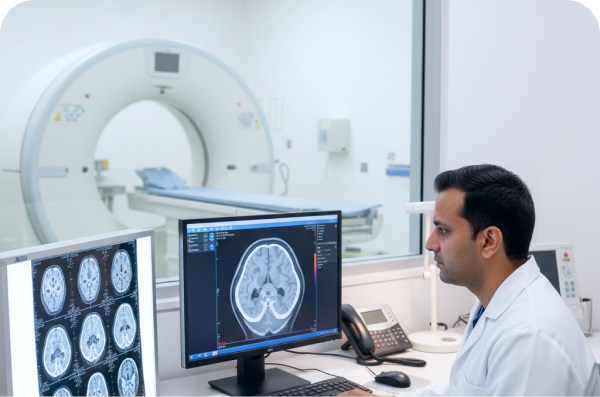





Understanding Magnetic Resonance Imaging (MRI)
Magnetic Resonance Imaging (MRI) is a cutting-edge, non-invasive imaging technology that uses a powerful magnetic field, radio waves, and a computer to produce detailed pictures of organs, soft tissues, bone, and virtually all other internal body structures. Unlike X-rays or CT scans, an MRI does not use ionizing radiation, making it a safe diagnostic tool for many conditions.
The procedure is particularly valuable for examining the body's major joints and the central nervous system, which includes the brain and spine. The high-resolution images generated by an MRI allow physicians to assess injuries, diagnose diseases, monitor treatment effectiveness, and plan procedures with great precision.
What is an MRI?
MRI technology relies on the natural magnetic properties of water molecules within the body. When a patient is placed inside the MRI scanner (a large, tunnel-shaped machine), the strong magnetic field temporarily aligns these water molecules. Radio waves are then pulsed through the body, knocking the aligned molecules out of position. As the molecules snap back into alignment, they emit signals that are detected by the scanner. A computer processes these signals to create cross-sectional images, or "slices," of the targeted area.
In some cases, a contrast agent, often a substance called gadolinium, is injected intravenously. This substance enhances the clarity of the images, especially for blood vessels, tumors, and inflammation.
Preparing for Your MRI:
Preparation is critical to ensure both the safety of the patient and the quality of the images. Because the MRI machine uses an extremely strong magnet, no magnetic metal objects must enter the scanner room.
Before the exam, you will be asked to complete a detailed safety screening form. You will typically be required to change into a hospital gown and remove all metal objects, including:
Jewelry, watches, and hairpins
Eyeglasses and hearing aids
Wigs and dentures
Clothing with metal snaps, zippers, or underwire
Certain implanted medical devices containing metal may prevent you from having an MRI. It is vital to inform your physician and the MRI technologist if you have any of the following:
Pacemakers or implantable cardioverter-defibrillators (ICDs)
Intracranial aneurysm clips
Cochlear implants
Metallic joint prostheses (depending on type and certification)
Metal fragments from accidents or surgery
You should also discuss any history of kidney problems, asthma, or allergies, particularly if contrast dye is required for your exam.
Specific Applications of MRI:
MRI of the Brain and Spine An MRI of the brain and spine provides unparalleled detail of the central nervous system. It is often used to diagnose and evaluate:
Neurological disorders: Multiple sclerosis (MS), stroke, dementia, and epilepsy.
Structural abnormalities: Congenital malformations and hydrocephalus.
Tumors and cysts: Identifying their size, location, and relationship to surrounding tissues.
Spinal issues: Herniated discs, spinal cord compression, nerve root impingement, and infection or inflammation along the spine.
During a brain or spine MRI, the patient lies on a movable table that slides into the scanner. The exam is painless but requires the patient to remain perfectly still to avoid blurring the images. The procedure typically takes 30 to 60 minutes.
MRI of the Knee:
The knee joint is complex, involving bone, cartilage, ligaments, tendons, and muscles. In combination with conventional X-rays, MRI is the preferred method for examining the knee because it provides clear images of soft tissues that X-rays cannot capture.
A knee MRI is performed to diagnose or evaluate:
Injuries: Tears in ligaments (like the ACL or PCL), tendons, or the meniscus (cartilage).
Inflammation and swelling: Detecting conditions like arthritis or bursitis.
Internal bleeding or fluid accumulation within the joint.
Bone issues: Identifying fractures, infections, or tumors.
The patient is positioned comfortably on the table, and a specialized coil may be placed around the knee to enhance image quality.
What to Expect During the Exam:
Once inside the scanner, you will hear loud tapping or thumping noises as the machine generates the radio frequency pulses. Hearing protection, such as earplugs or headphones, will be provided. The technologist will monitor you from an adjacent room and can communicate with you through an intercom system. You may also be given a call button to press if you feel uncomfortable.
It is important to remember that MRI is a safe, radiation-free procedure. Although the scanner environment can be confining, the detailed information it provides is essential for accurate diagnosis and effective treatment planning.
Cost and Insurance:
MRI costs vary widely based on geographic location, the specific area of the body being scanned, and the facility (hospital versus outpatient center). Without insurance, the cost can range significantly. Patients with insurance should consult their provider to understand their specific coverage, including deductibles and copays, as insurance coverage can significantly reduce out-of-pocket expenses.