Made with Levo




Understanding the Spirometry (Pulmonary Function Test - PFT)
Spirometry, often referred to as a Pulmonary Function Test (PFT), is a fundamental diagnostic tool used by healthcare professionals to assess how well your lungs are working. This simple, non-invasive test measures airflow and lung strength, providing crucial data on how much air your lungs can hold and how quickly you can move air in and out. By evaluating these metrics, spirometry plays a vital role in diagnosing, monitoring, and managing lung and airway conditions.
What is Spirometry? At its core, spirometry measures two main components of lung function:
Forced Vital Capacity (FVC): The largest amount of air you can forcefully and completely blow out after taking the deepest possible breath.
Forced Expiratory Volume in One Second (FEV1): The amount of air you can exhale during the first second of that forceful breath. This is a key indicator of airway obstruction.
Why is Spirometry Performed? (Purpose)
Spirometry is essential for:
Diagnosing Lung and Airway Diseases: Helps identify conditions such as asthma and chronic obstructive pulmonary disease.
Determining the Cause of Symptoms: Assists in identifying breathing issues linked to coughing or shortness of breath.
Monitoring Chronic Conditions: Helps track the progression of lung disease.
Assessing Treatment Effectiveness: Used to measure improvement after using bronchodilator medication.
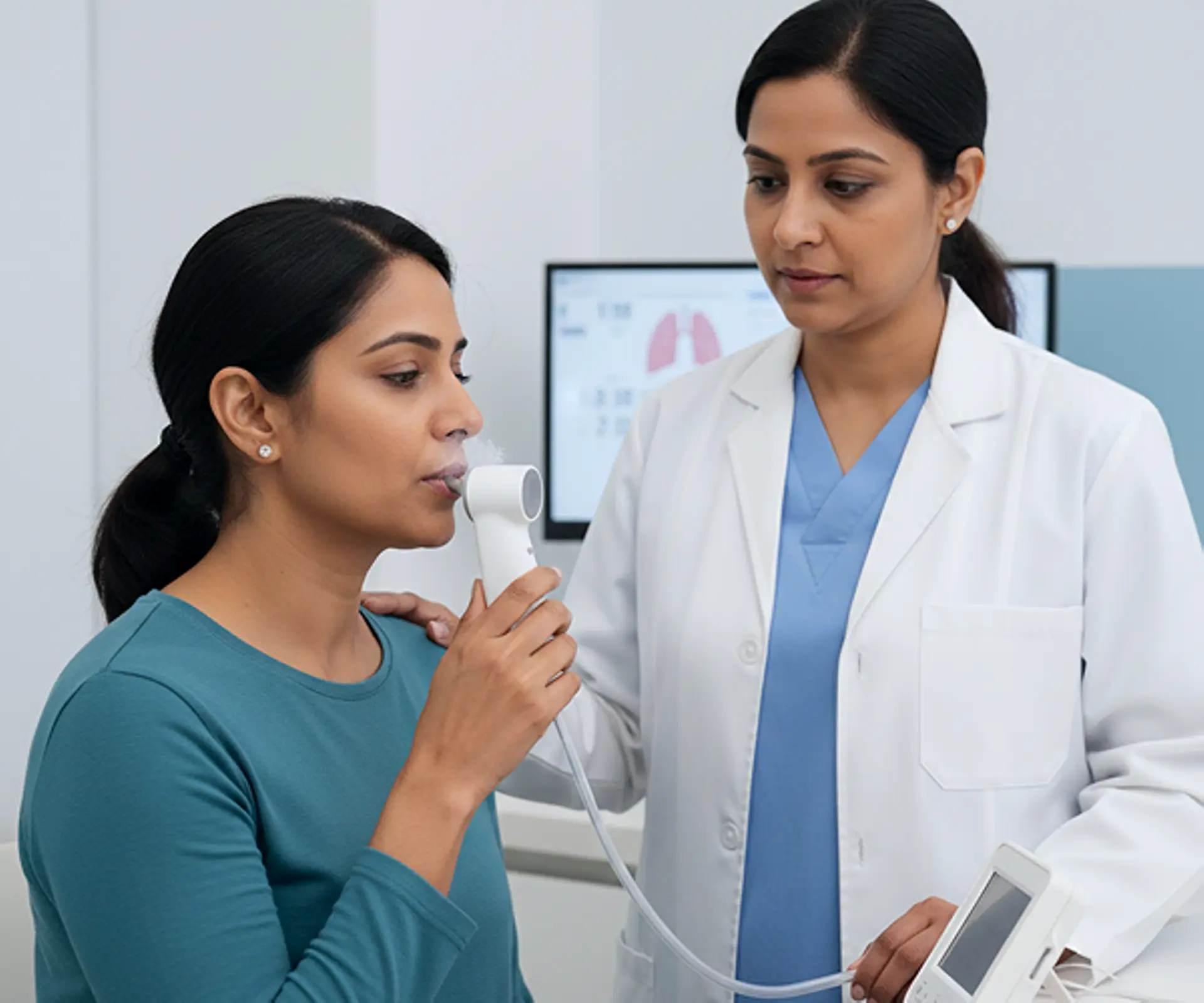
The Spirometry Procedure: What to Expect The procedure typically lasts around 30 to 45 minutes:
Preparation: A soft nasal clip is placed on your nose, and you will breathe into a mouthpiece.
The Maneuver: You take a deep breath in and then blow out as forcefully and completely as possible.
Repeating the Test: You may repeat the maneuver at least three times to ensure accuracy.
Preparing for Your Spirometry Test
Medication: You may be instructed to avoid certain inhalers for six to eight hours before the test.
Clothing: Wear loose, comfortable attire.
Eating and Exercise: Avoid heavy meals and strenuous activity before the test.
Smoking: Do not smoke for at least six hours before testing.
Potential risks
While PFTs are generally safe, there are some potential risks, including temporary dizziness, coughing, or shortness of breath. Individuals with a recent eye, chest, or abdominal surgery, a recent heart attack, or an aneurysm should not have these tests.
What should I expect after spirometry?
After the test, you may restart any medicines your healthcare provider told you to stop taking. You can also return to your usual activities, including exercise.
Your healthcare provider will tell you when to expect your test results.
In some cases, they may also test for lung volume and diffusion capacity after a spirometry test. These tests measure your lung volume capacity, as well as the ability of your lungs to transfer oxygen to your blood. These tests supplement spirometry tests by helping your provider diagnose certain lung or breathing conditions. Your provider may conduct these tests regularly to see how your breathing is progressing.
What is a normal reading on a spirometer?
A “normal” spirometer reading depends on a few factors, including your gender.
Your healthcare provider will use these characteristics to determine a typical reading for your demographic.
Spirometry measures two main components:
Forced vital capacity (FVC). FVC is the highest amount of air you can forcefully and completely blow out after taking a deep breath in.
Forced expiratory volume (FEV1). FEV1 is the amount of air you blow out in one second.
Once you’ve taken your test, your healthcare provider will compare your score against the typical reading for your demographic. A normal reading is 80% or higher than the typical demographic reading.
Your readings can also help your healthcare provider determine what kind of condition is affecting your lungs. These may include:
Obstructive lung disease. Damage to your lungs or airways makes breathing out all the air in your lungs difficult. Common causes of obstructive lung disease include asthma, bronchiectasis, COPD, and cystic fibrosis.
Restrictive lung disease. You can’t fully expand your lungs. Common causes of restrictive lung disease may include amyotrophic lateral sclerosis (ALS), interstitial lung disease, muscular dystrophy, sarcoidosis, and scoliosis.
Lifestyle Tips to Help Maintain Healthy Lungs
Quit Smoking and Vaping: This is the single most important step in protecting lung tissue from permanent scarring and inflammation.
Deep Breathing Exercises: Practice diaphragmatic breathing or "pursed-lip" breathing to strengthen the muscles used for respiration.
Regular Aerobic Exercise: Activities like brisk walking, swimming, or cycling improve your heart and lung efficiency, making it easier for your body to use oxygen.
Improve Indoor Air Quality: Use HEPA filters, avoid indoor incense or heavy perfumes, and ensure proper ventilation when cooking.
Stay Hydrated: Drinking enough water helps keep the mucus lining in your lungs thin, making it easier to clear out irritants and pollutants.