

 Made with Levo




Understanding STD Profile
Taking control of your sexual health is a vital part of overall well-being, and regular screening for Sexually Transmitted Diseases (STDs), often referred to as Sexually Transmitted Infections (STIs), is a key component of this proactive approach. The STD Profile Test is a comprehensive screening panel designed to detect several of the most common and critical infections in a single, convenient process.
What is the STD Profile Test?
The STD Profile is not a single test, but rather a grouping of tests performed simultaneously to check for various pathogens that can be transmitted through sexual contact. Common infections screened for in a standard profile often include:
Chlamydia & Gonorrhea: Common bacterial infections often diagnosed via urine testing.
Syphilis: A bacterial infection monitored via blood tests looking for antibodies.
HIV (Human Immunodeficiency Virus) & Hepatitis B (HBV): Bloodborne viral infections checked for early detection and management.
Trichomoniasis: A common curable STI caused by a parasite, often diagnosed via urine testing.
Herpes Simplex Virus (HSV-1 and HSV-2): Screening sometimes included through blood tests looking for antibodies.
Why is STD Testing Important?
Many STDs are "silent"- meaning they cause no noticeable symptoms, especially in the early stages. The primary reasons for undergoing an STD Profile Test are:
Early Treatment: Allows for prompt antibiotic or antiviral treatment, often leading to a full cure or effective management.
Preventing Complications: Untreated STDs can lead to severe, irreversible health issues, including infertility and organ damage.
Protecting Partners: Knowing your status is the first step toward preventing transmission.
The Testing Process: What to Expect
The STD Profile Test is non-invasive and straightforward, often requiring several types of biological samples:
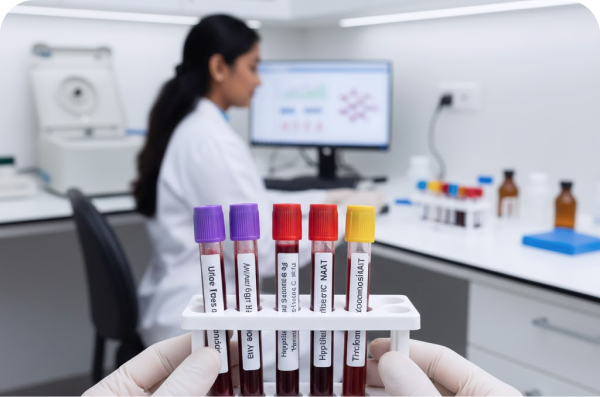
Blood Sample (Venipuncture): Used to screen for systemic infections such as Syphilis, HIV, and Hepatitis B, looking for antibodies.
Urine Sample: The standard method for diagnosing common urogenital infections like Chlamydia, Gonorrhea, and Trichomoniasis, using highly sensitive Nucleic Acid Amplification Tests (NAATs).
Swab Sample (If Indicated): Used for direct detection of pathogens like Herpes or Chlamydia at the site of infection.
Receiving and Interpreting Results
If any test result is "reactive" or "positive," it means an infection has been detected. Your healthcare provider will immediately discuss the results with you and explain the next steps, which involve confirming the diagnosis (if necessary) and starting the appropriate treatment protocol.